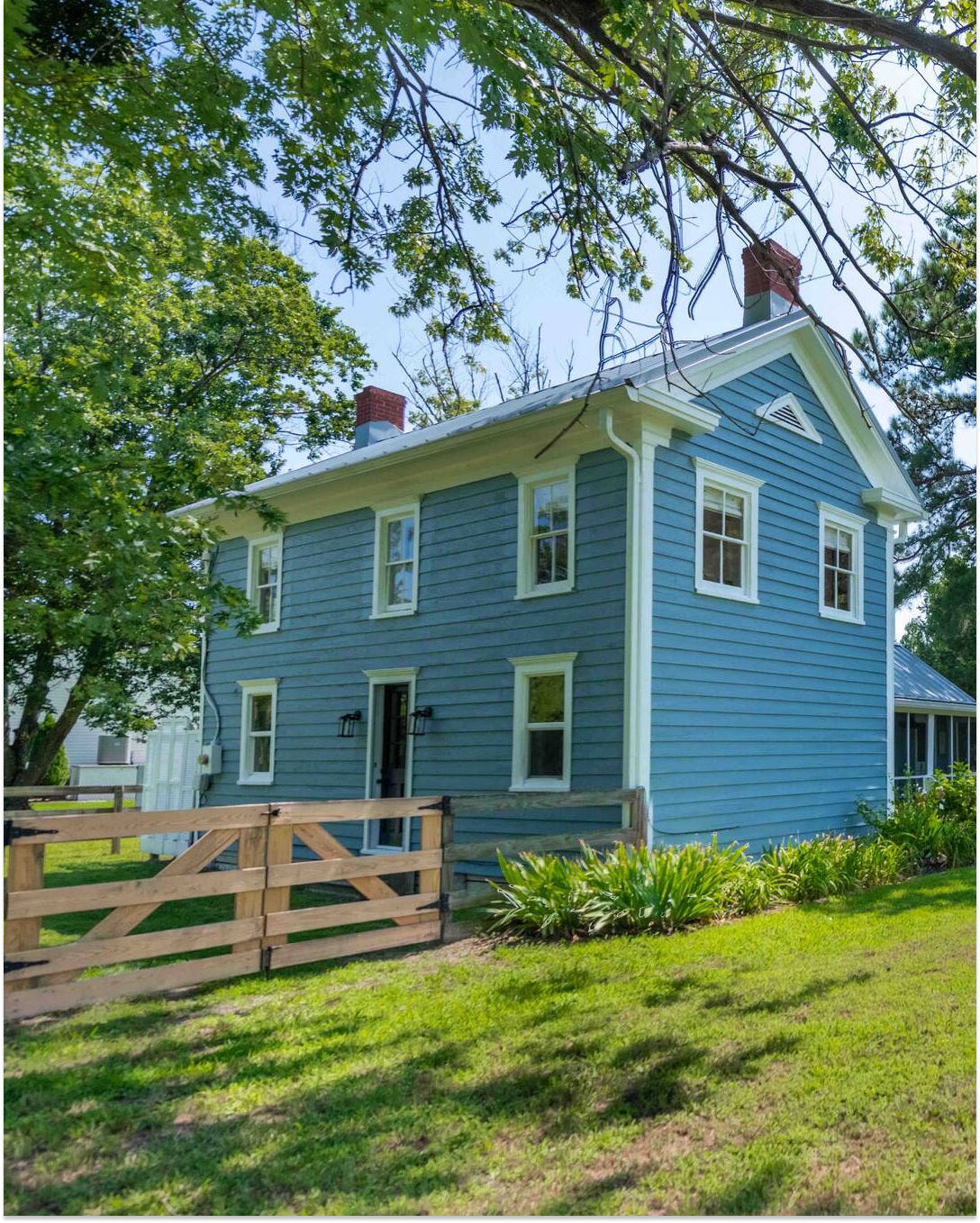

Blue Oyster Cottage: Inside the Northern Neck Farmhouse Mary Lou Stufano Brought Back to Life
Mary Lou's design philosophy prioritizes creating a "backstory" first, resulting in interiors that feel "collected" and lived-in rather than overly styled or trend-focused
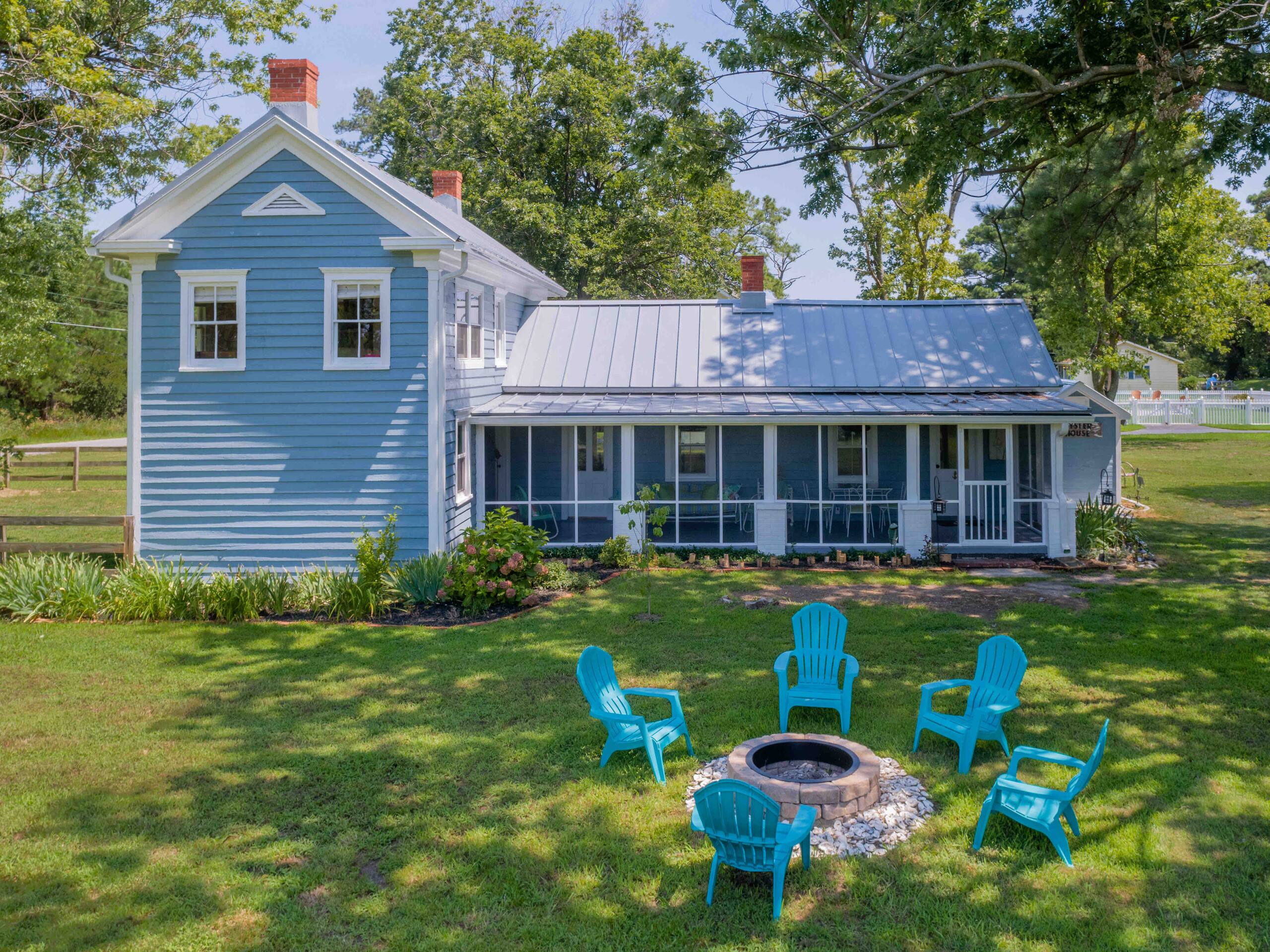

How a falling-down farmhouse on Virginia's Northern Neck became a hands-on family retreat — built on history, curated collecting, and the belief that the best hosts never really leave the room.
Some homes are built.
Others are discovered.
Blue Oyster Cottage belongs firmly in the second category.
Long before it became one of Virginia's most thoughtful coastal retreats, the home was a forgotten farmhouse on the Northern Neck — the quiet finger of land where the Potomac and the Rappahannock empty into the Chesapeake Bay. The ceilings sagged. Wallpaper covered wallpaper. Years of neglect had left the property with an uncertain future.
"It probably would've been torn down if we hadn't bought it," Mary Lou Stufano says.
"We didn't see a house that needed saving. We saw a story that deserved another chapter." — Mary Lou Stufano
A Weekend on the Northern Neck: How Mary Lou and Mike Found the House
Mary Lou and her husband, Mike, weren't house hunting.
They were supposed to be in Europe. When those plans fell apart in the early days of the pandemic, they took a weekend trip instead — to a part of Virginia's coastline they'd never really explored.
"We actually got a targeted real estate ad," Mary Lou remembers, "and we thought, 'Here's this falling-down house — I wonder how much it costs.'"
"By the end of the weekend, we had signed the papers. It was sort of a whim." — Mary Lou Stufano
They didn't have a plan for it yet.
"We weren't sure at that point what we wanted to do with it — whether we wanted it as just a family getaway, or something else," she says. "It eventually turned into much more."
By the time the renovation was finished, Mary Lou and Mike had relocated to the area full-time. What started as an impulsive weekend purchase had become their second act.
Seventeen States and a Degree in History: Mary Lou Stufano's Path to Design
Ask Mary Lou where she's from, and the answer isn't simple.
"I've lived in seventeen different states before high school," she says — an itinerant childhood that, as an adult, settled mostly between Florida and Virginia.
Her academic background wasn't design at all. She studied history and archaeology. It's a detail that explains a lot about how she approaches an old house — less as a decorator and more as someone piecing together a narrative that was already there, waiting to be read.
Design found her anyway. In the 1980s, Mary Lou got her start working for Laura Ashley, "back when Mrs. Ashley was still alive," she says — and it was there she discovered a lasting love of fabric, pattern, and the way a house could tell a story through its textiles.
Florida came next. Mary Lou worked for a design firm in Sanibel, learning to navigate coastal interiors that had to survive sun, salt, and humidity without losing their warmth — "understanding which products and materials were durable, and which ones were appropriate for rentals," as she puts it. It was practical training that would matter more than she knew at the time.
Travel rounded out the education no classroom could offer. Mary Lou and Mike are frequent overseas travelers, and some of their best trips, she says, came down to the places they stayed — small, owner-run properties where the person who greeted them at the door was also the person who'd chosen every detail inside.
These days, Mary Lou has mostly stepped back from professional design work — except, she jokes, for her own kids' homes. Her primary occupation now is history, just wearing a different hat: she works as an interpreter at Colonial Williamsburg.
"It seems like I've become an interpreter," she says. "Which is melding my love of history, and architecture, and everything else."
From Shell to Sanctuary: Renovating a Northern Neck Farmhouse
The house Mary Lou and Mike bought that weekend wasn't a fixer-upper in any gentle sense.
"It literally was a shell," she says. "Upstairs had about five-foot ceilings, with about twelve layers of wallpaper. If we hadn't bought it, it probably would have been bulldozed."
They took it down to the studs.
The porch was almost entirely rebuilt. Upstairs, the ceilings were opened and coved, trading the old five-foot crawl-and-duck height for something a person could actually stand in. The original woodwork and fireplaces were kept intact — the parts of the house's history worth preserving stayed put.
The kitchen did not.
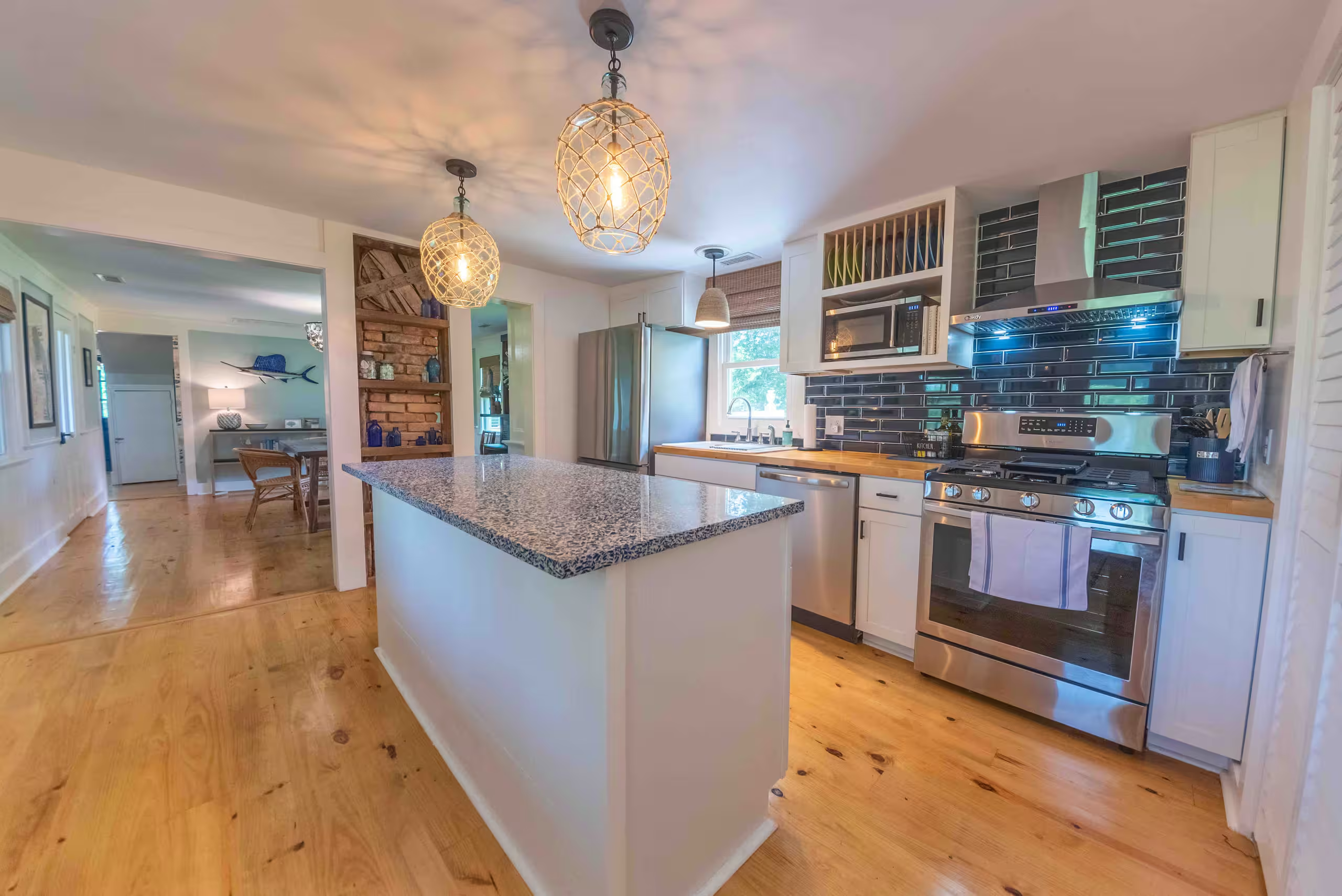
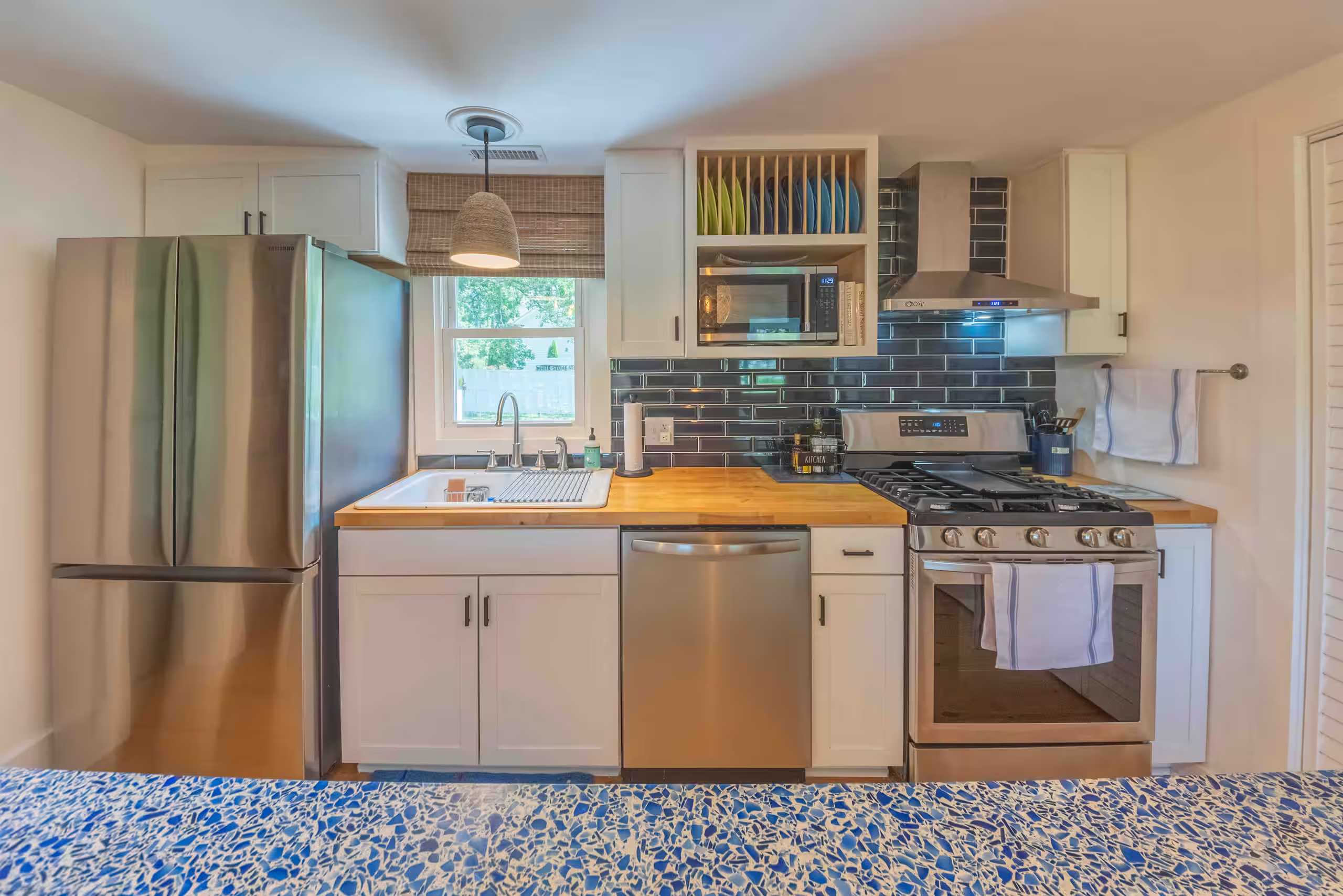
"The kitchen is one hundred percent new," Mary Lou says. Bathrooms were rebuilt as well, and a half bath was added upstairs — practical additions for a house that would eventually need to sleep, feed, and host a rotating cast of guests, not just a family of four.
It took roughly two and a half years.
"The best restorations don't erase the past. They create space for new memories to join it." — Mary Lou Stufano
Mary Lou approached the design the way she approaches most things: by inventing a backstory first, then designing toward it.
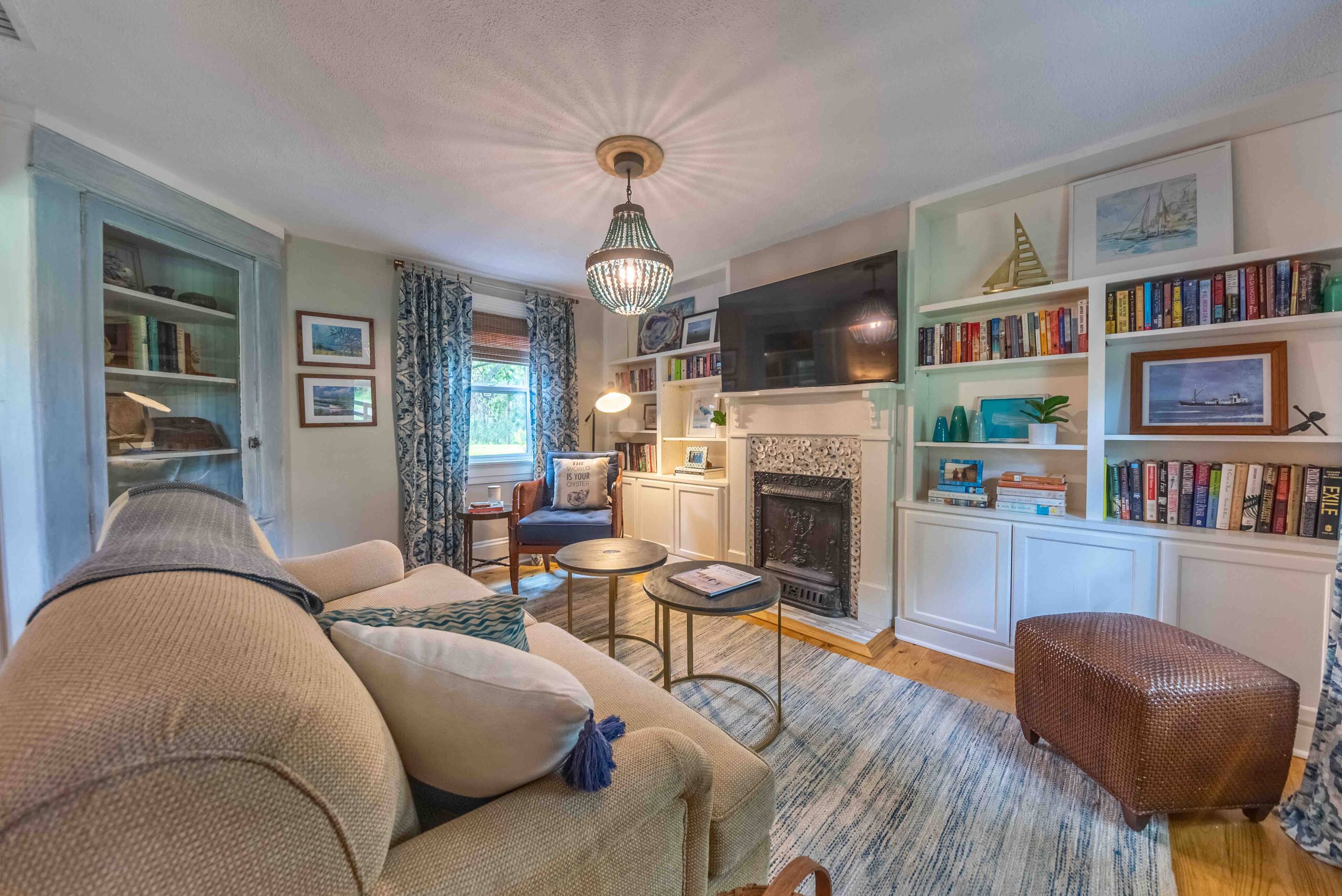
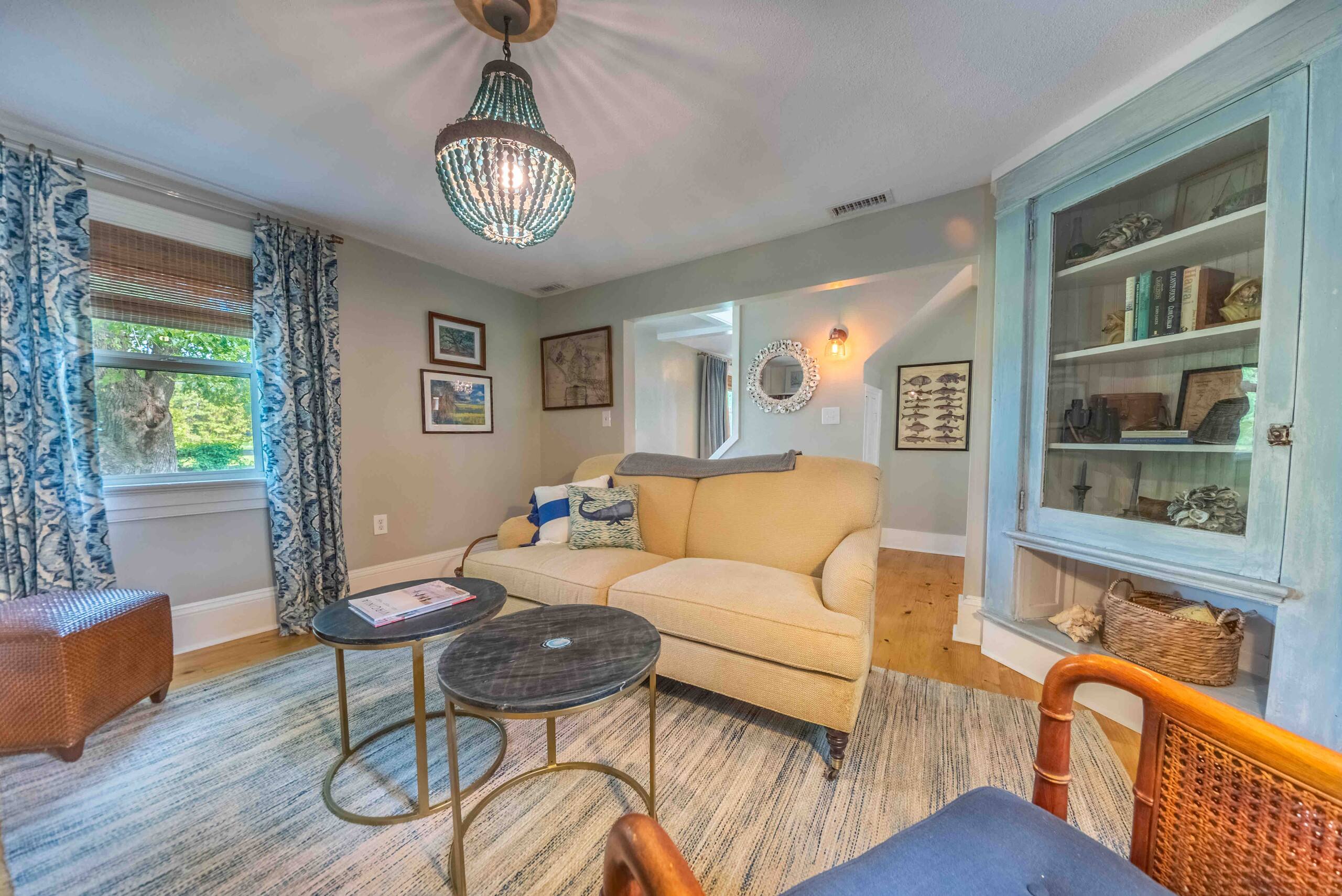
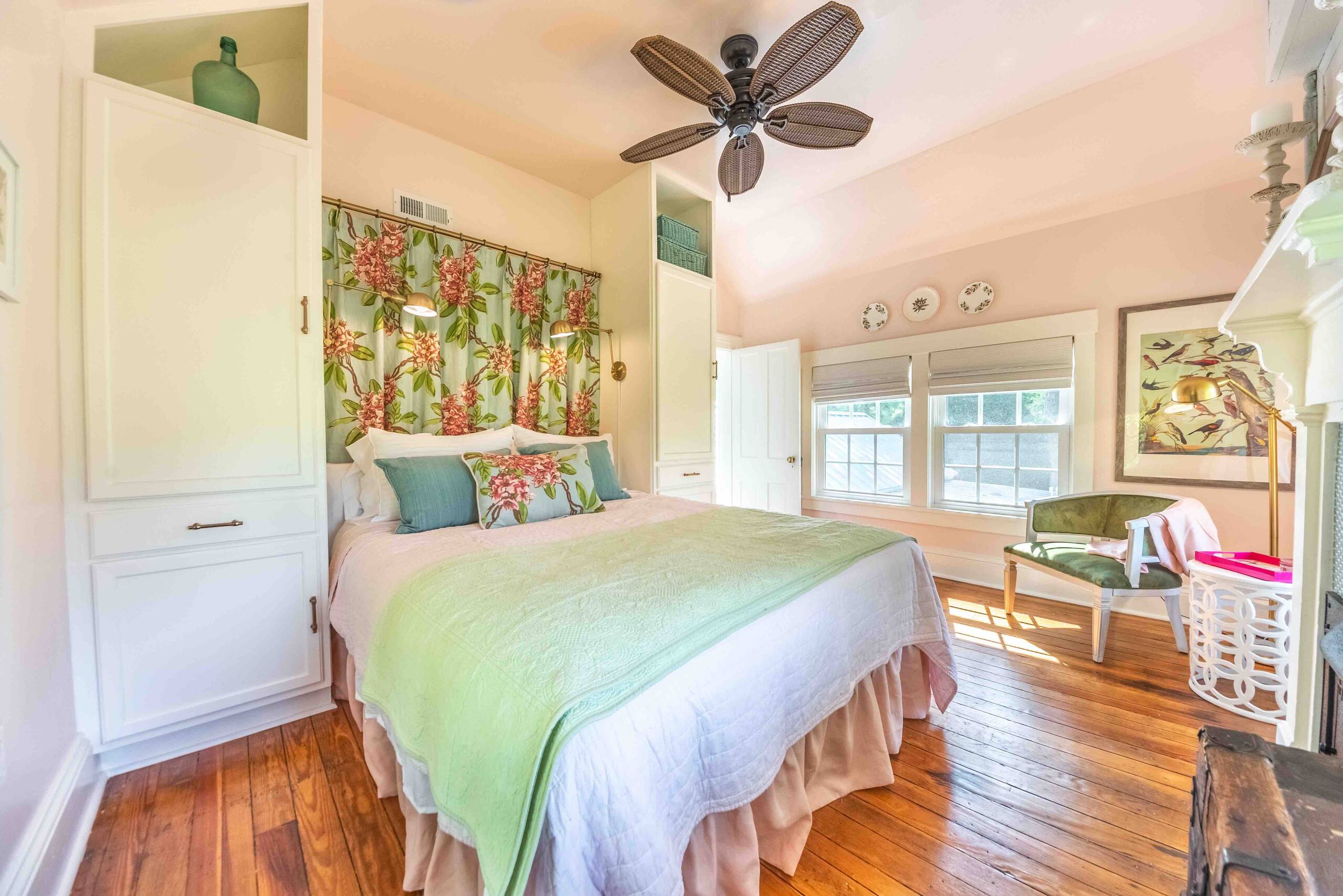
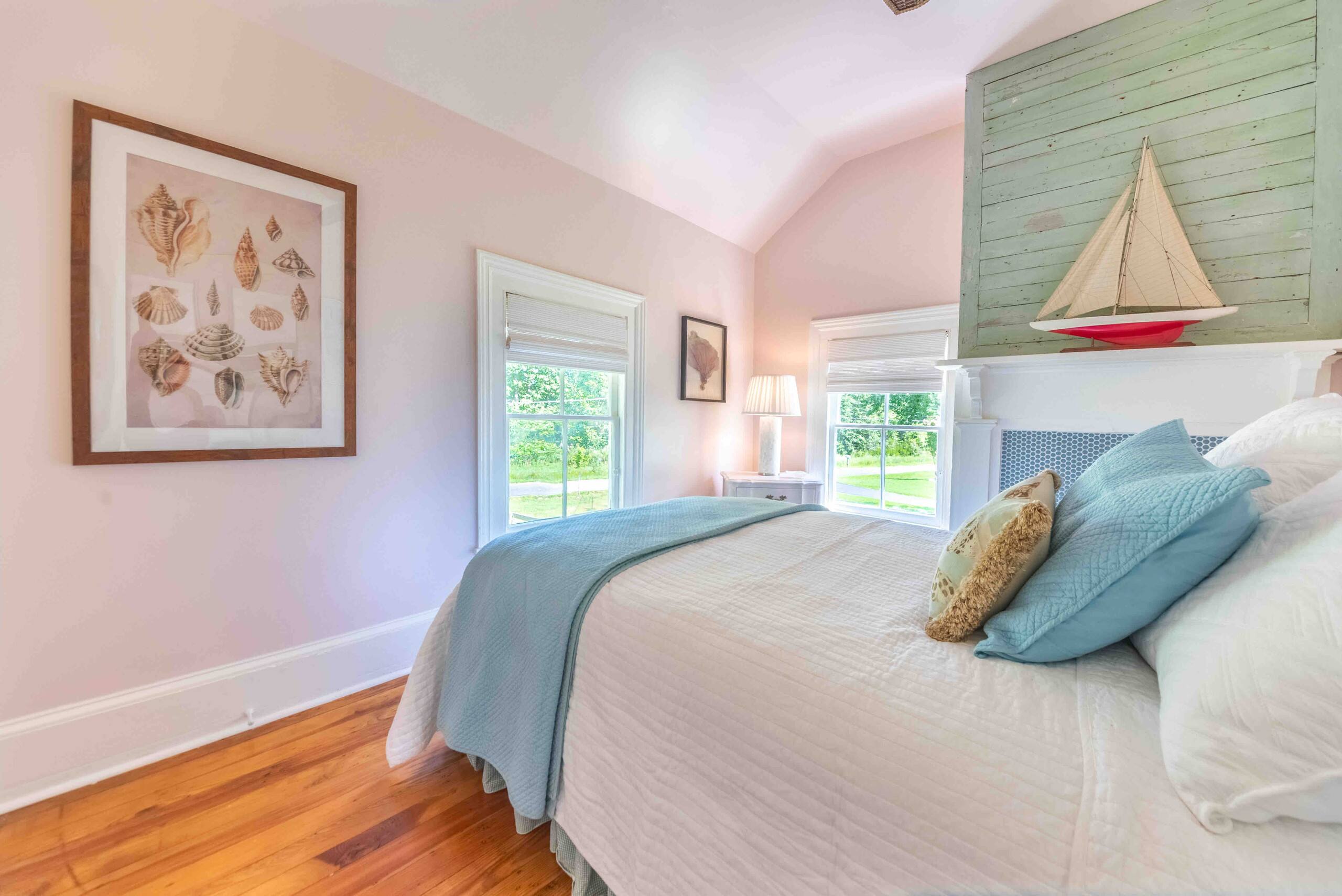
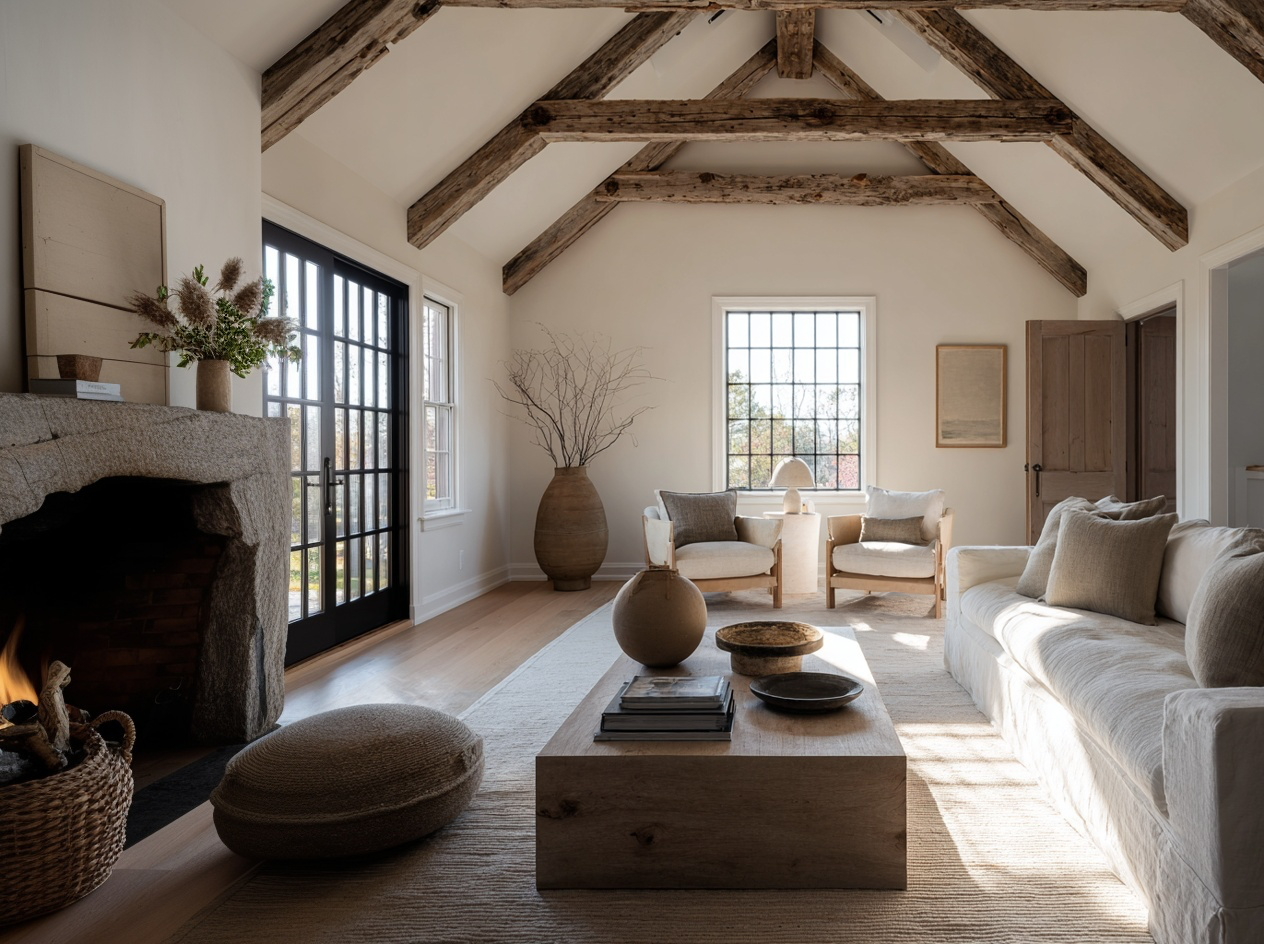
"I wanted it to feel like a family beach cottage," she says, "old and a little worn in — the kind of place you'd inherited and visited for generations, modernized just enough to be comfortable, but never too fussy, never overdone."
She leaned toward New England coastal over Florida coastal in her material choices. "Florida coastal can get a little kitschy," she says. "I wanted something more restrained."
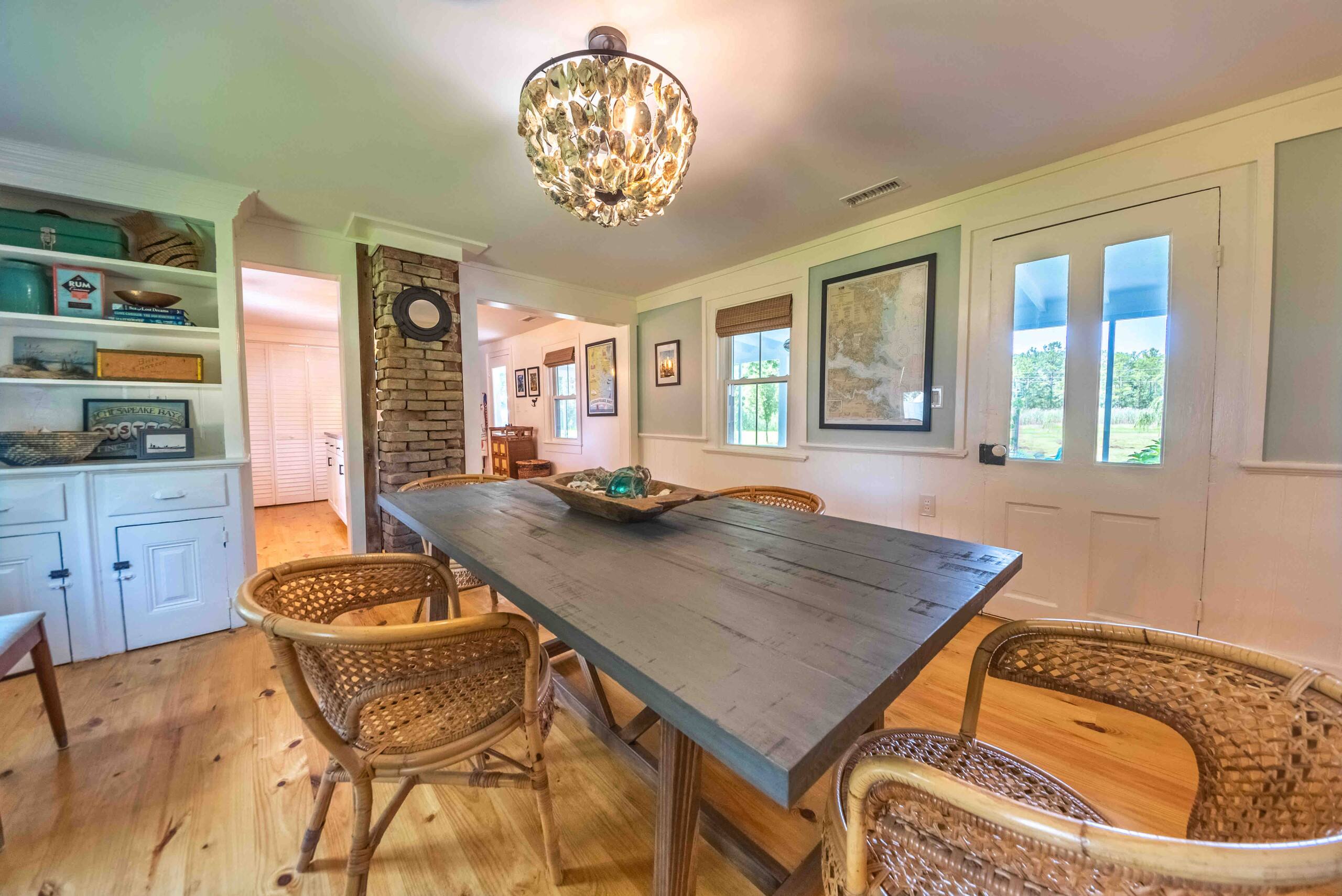
The result, filled slowly with antiques and odds and ends pulled from shop after shop, doesn't read as decorated so much as accumulated.
"I never wanted it to feel decorated. I wanted it to feel collected — like every piece had a reason for being there."— Mary Lou Stufano
The Screened Porch and the Glider That Came Home
Every house like this has a room where people actually gather. At Blue Oyster Cottage, it isn't a room at all.
It's the porch.
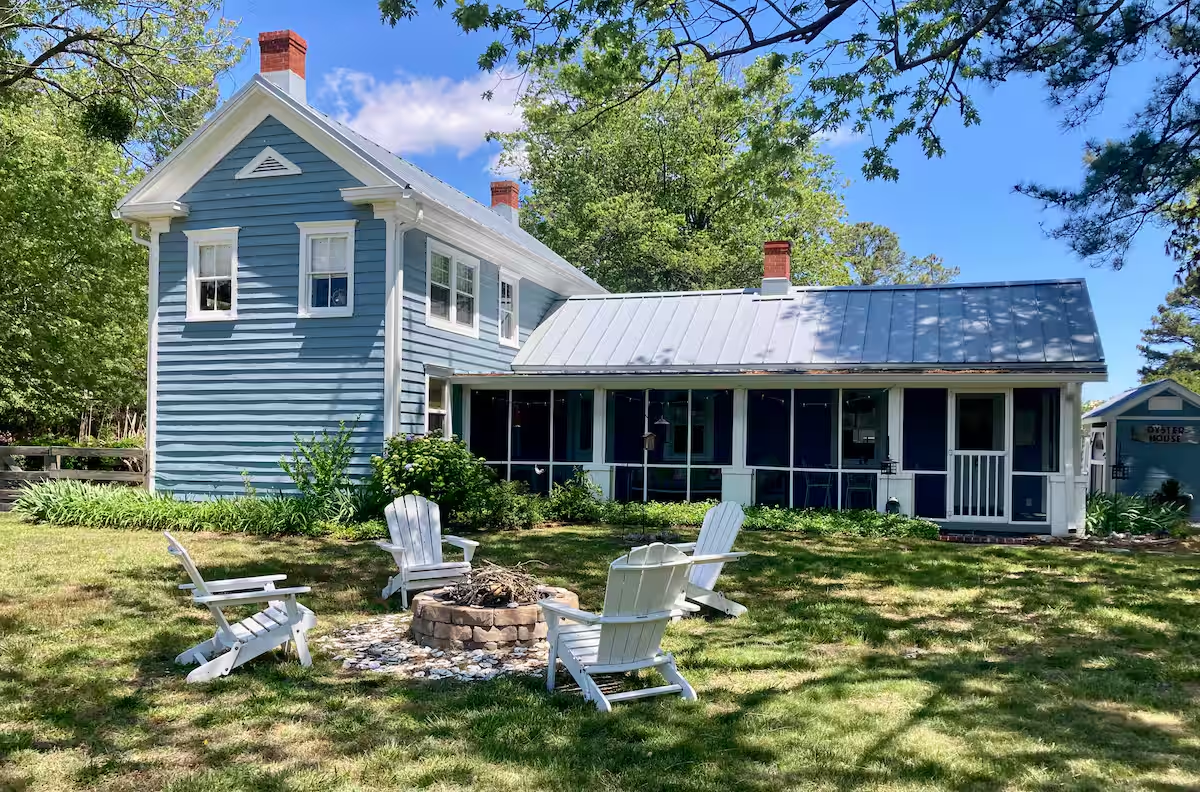
Old-fashioned and fully screened, with a tin roof that turns rain into music and views where, as Mary Lou puts it, "you really can't see another house," the porch is the space every guest mentions first.
One piece in particular gives it its weight.
A vintage metal glider sits in the corner — unremarkable to a first-time guest, and quietly central to Mary Lou's own life. It came from a log-cabin farmhouse in West Virginia that her family — technically, a group of nine friends, her brother among them — bought back in the 1960s and still owns nearly sixty years later.
"That was the gathering place growing up," she says. "The big front porch, the glider. I've been going there since I was a small child."
When the cabin's owners eventually replaced the glider, Mary Lou claimed the old one for herself.
"I rocked my babies there. I've taken many naps there. It's got a lot of memories — that's what I wanted to bring into the cottage." — Mary Lou Stufano
It has become her reward, too. On changeover days, once the cleaning is done and the laundry is running, she'll grab a book and sit on the glider until the next guests arrive.




Blue Oyster Cottage: A Name Rooted in the Chesapeake Bay
The Northern Neck runs on tides, marshes, and one particular shellfish.
"Everything in that area is oysters," Mary Lou says. "All roads lead to oysters. Oysters have brought back the Chesapeake Bay."
The house itself had been painted blue. Between the color and the local obsession with the Bay's signature mollusk, a name suggested itself — with one more layer buried underneath.
"Back in the day, my husband and I were Blue Oyster Cult fans," Mary Lou admits. "I think that was stuck in the back of our minds a little bit." A framed Blue Oyster Cult record hangs in one of the sitting rooms — a wink that most guests never catch, and the kind of detail Mary Lou loves precisely because it isn't explained anywhere on the listing.
Around the property, it's mostly just "the cottage" — easier to type into a message, she says, and it reads warmly in a note to guests. The sign out front, though, makes it official: Blue Oyster Cottage.

Hands-On Hosts: Why Mary Lou and Mike Clean the Cottage Themselves
Blue Oyster Cottage wasn't always going to be run this closely.
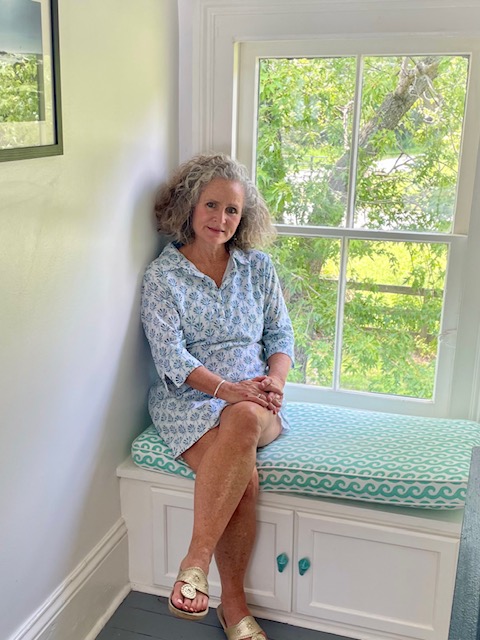
"I'm really glad we're hands-on now," Mary Lou says. "I'm not sure anybody can do this well long distance — not without exactly the right people in place." She and Mike clean the property themselves.
"I like being fully in control," she admits. "In fact, when we travel, it makes me anxious. I'm not good at giving up control."
Her kids have noticed.
"My kids are always saying, 'Mom, you're trying to be Airbnb Host of the Year.' I just do what I would want somebody to do for me." — Mary Lou Stufano
They tease her the other way, too: that she doesn't actually want to run a short-term rental — she wants to run a bed and breakfast, minus the part where the guests want her there.
It shows in the reviews. Almost all of them mention Mary Lou or Mike by name.
That instinct — for hospitality that's personal rather than transactional — comes directly from how the couple travels themselves. "We look for very well-curated properties," Mary Lou says, "places actually run by the owners, or where the owners are local. It takes a little more work to find them. But it's very possible, and I think it matters."
She's careful to separate that philosophy from the broader controversy around short-term rentals — a fight she and Mike know firsthand, having gone through their county's zoning and planning process to legally operate the cottage. "If it is what it originally is — individual property owners taking care of their own place and running it — that's one thing," she says. "It's very different from people buying up whole apartment buildings."
Why Mary Lou Believes in Direct Booking
For years, Mary Lou left her contact information inside the cottage itself—a notebook by the door and an open invitation for guests to reach out directly the next time they visited.
Guests rarely took her up on it.
"It always surprises me," she says. "Repeat guests still go through the platform. I have a notebook right there with our contact information—please reach out to us directly—and they still book through the app."
This year, that finally started to shift.
"For the first time, I've gotten half a dozen people reach out through Instagram messages that turned into direct bookings," she says. "It's taken four years, but it seems like it's finally happening."
Mary Lou also credits a chance connection with helping her get there. She met Heather, a fellow local host, during one of the county's short-term rental planning meetings amid the local zoning debates. Heather later shared Blue Oyster Cottage in an Apartment Therapy feature about how Mary Lou stumbled onto the property while on vacation and ended up buying it, "Here's How One Woman Went on Vacation — And Bought a House", and encouraged Mary Lou to create an Instagram account for the cottage in the first place. Mary Lou did walk through the house in person before making an offer—she and her husband toured the neglected farmhouse the day after first spotting it, before deciding to buy.
"I learned a lot from her," Mary Lou says. "Even now, every once in a while, I'll still reach out to her about something."
Whether the feature directly led to bookings, she's honestly not sure. What she does know is that it gave her a resource, a mentor, and the encouragement to start sharing the story of Blue Oyster Cottage beyond the booking platforms.
Life on the Northern Neck: Oysters, Marinas, and Small-Town Luxury
Part of what makes the area work, Mary Lou says, is the way it holds two things at once.
"It's a great mix," she says. "Because of the water, there's a fair amount of money in the area, so you get amenities that are a little more high-end. But you still feel like you're out in the country. You're getting away from it all — but you still have good grocery stores, restaurants, shops."
Her daughter put it more simply on a first visit: that Mary Lou had somehow found a blend of Florida, Maine, and Charleston — coastal and marshy, but entirely its own place.
Who Stays at Blue Oyster Cottage
The guest list shifts with the seasons. Spring, fall, and winter tend to bring couples escaping for shorter stays. Summer is the cottage's busiest season—and its primary source of income—welcoming families who settle in for longer visits, cook together, and fully embrace life at the cottage. "You can't blame them," Mary Lou says with a laugh. "They're enjoying it."
It's never been a party house, and the original staircase—beautiful but steep—means it's not the best fit for every guest, particularly those with limited mobility. Instead, Blue Oyster Cottage attracts bird-watchers, nature lovers, and families celebrating life's milestones. Within just a few weeks, two separate families chose the cottage as the setting for surprise marriage proposals, both with parents there to share the moment.
Ask Mary Lou what she hopes every guest feels the moment they walk through the door, and the answer comes quickly: "Comfortable. Relaxed. That it's well curated and representative of the area. That it feels like a beach cottage—but that it's not overdone. Easy, comfortable. That they can walk in and treat it as their own."

Why We Chose Blue Oyster Cottage
Ask Mary Lou what she wants people to take away from all of this, and it isn't a design lesson.
"I just do what I would want somebody to do for me," she says. "I love making people happy. I'm thrilled when families make memories there, or couples, or whoever it is. I want people to enjoy it, just like we have."
That standard didn't come from nowhere. It came from years of being the guest — of choosing accommodations overseas based on exactly the qualities she now tries to offer: an owner who's actually present, a space that feels considered rather than commoditized, a sense that someone cared before you ever arrived.
Nothing at Blue Oyster Cottage was chosen simply because it looked right.
Everything belongs because it means something.
And every four years or so, when the sofa finally starts to show its wear, Mary Lou will wait until the last family of the summer has checked out — and only then bring in something new.
Photography by Stephen Blue, based in Deltaville, Virginia. Select images courtesy of Mary Lou and Mike Stufano.
Own a home with a story of its own?
Locèlle features design-led homes shaped by the people who created them. If your home has character, a point of view, and a sense of place, we would love to hear about it.
Continue Exploring
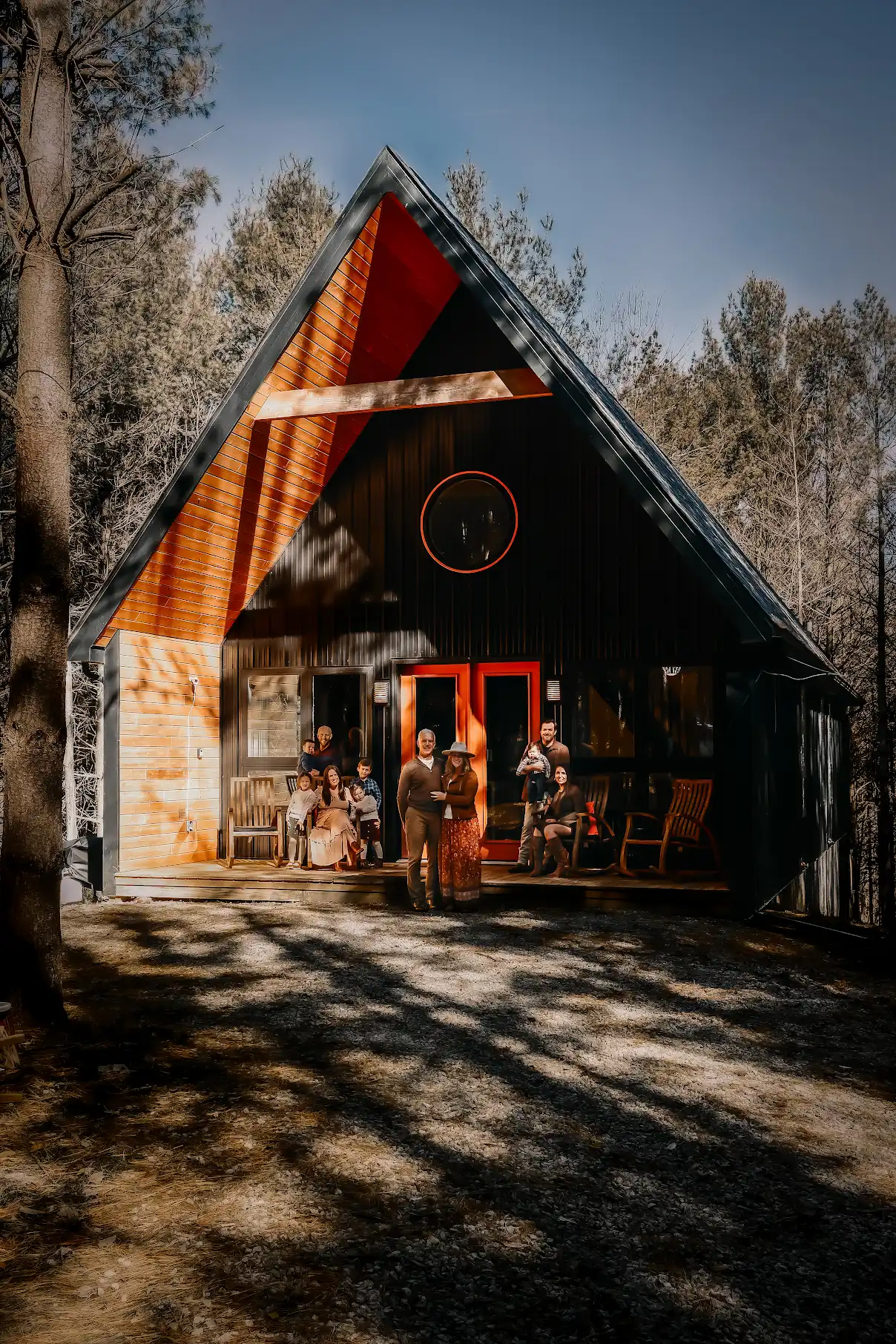
- Inside Timber & Glass: An A-Frame Hidden in North Carolina
- The Story Behind Kennebunkport's Most Thoughtful Coastal Retreat
- Why More Travelers Are Booking Vacation Homes Direct
- How Locèlle Curates Every Design-Led Stay
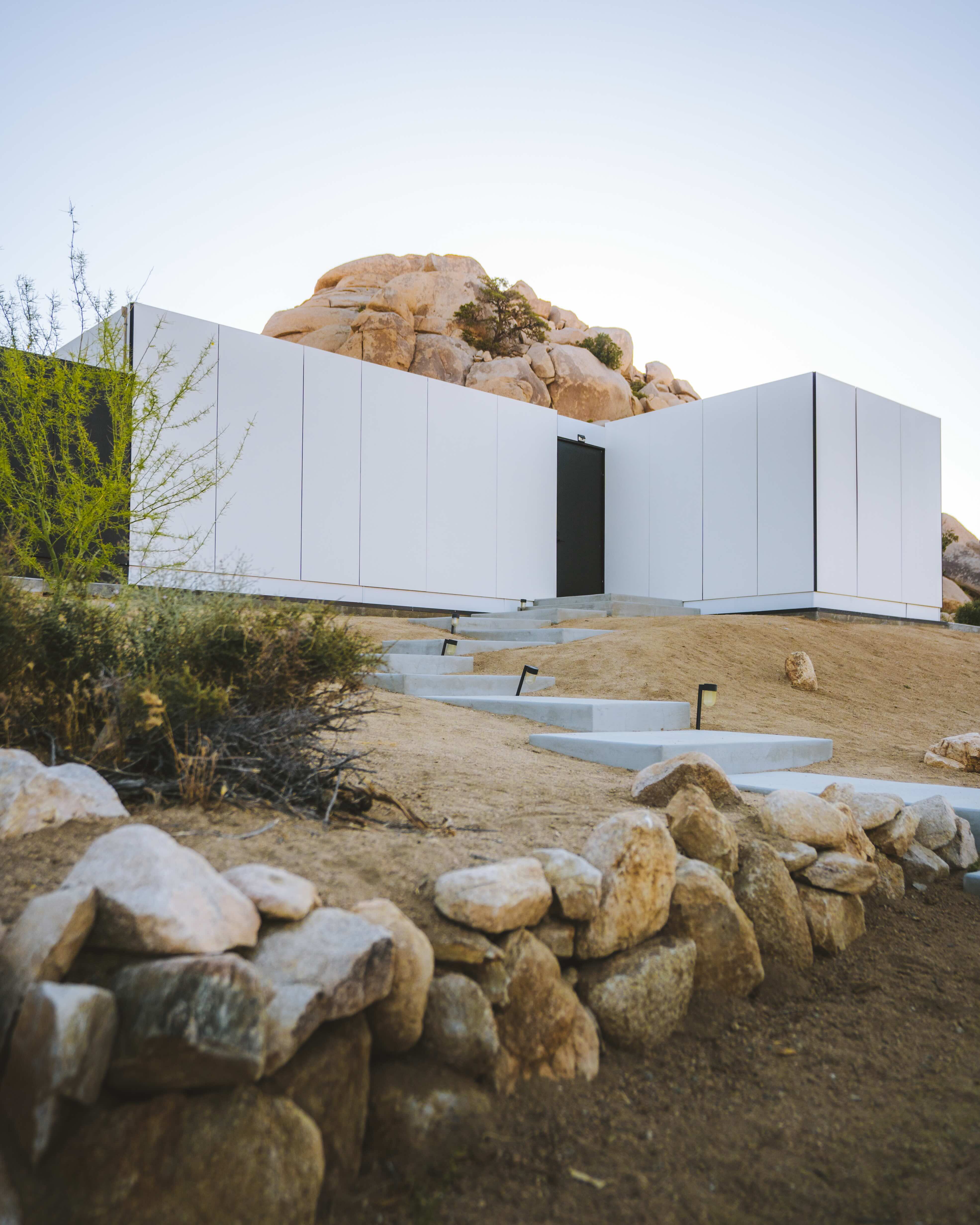
- Mockingbird Villa: A Mid-Century Desert Retreat for Birdwatchers and Design Lovers
- Atlas Farmstay: Design-Forward Vacation Homes in North Georgia


Discover homes worth traveling for
Join the Locèlle newsletter for design-led stays and off-market finds
Get on the listDiscover homes worth traveling for
Join the Locèlle newsletter for design-led stays and off-market finds
Get on the list